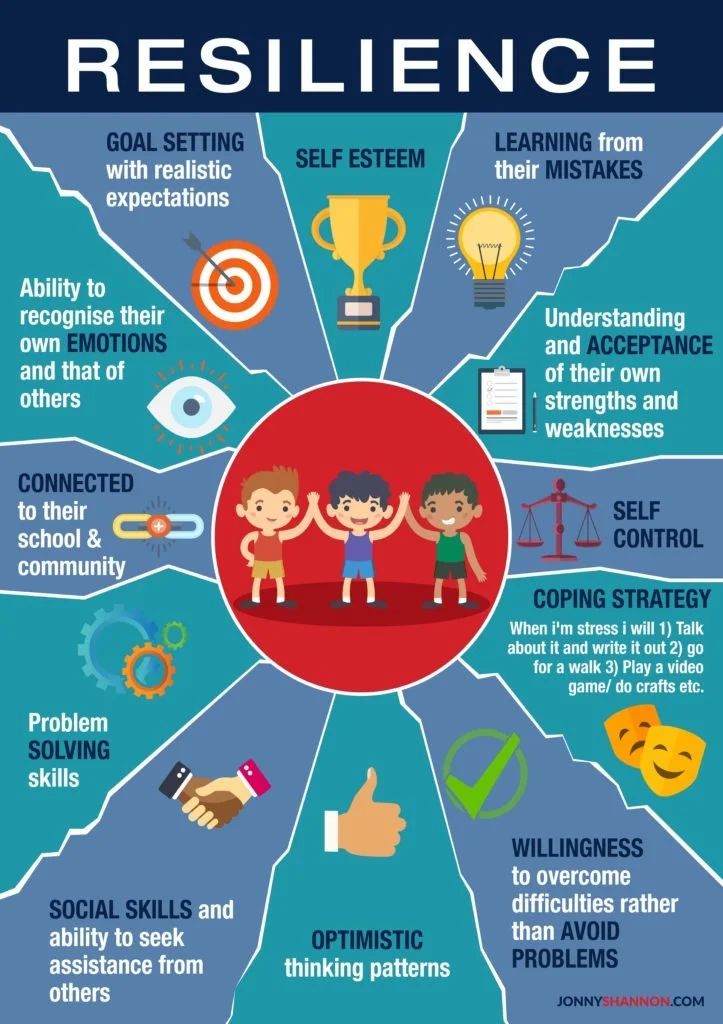
Rainy days linger, but sunshine follows. It’s a contradiction we parents often ignore: while we hustle to shield our kids from every storm, those very tempests build the unyielding spirit they need to thrive. In a world where childhood pressures—from social media scrutiny to academic demands—mount relentlessly, fostering resilience isn’t just helpful; it’s essential for raising well-rounded individuals who can bounce back from setbacks. This article dives into practical ways to build resilience in kids, drawing from real-life insights that could transform your family’s daily life, making it more harmonious and empowering. By the end, you’ll grasp how simple, everyday actions can cultivate resilience building habits, turning potential vulnerabilities into strengths.
Remembering My Own Storms: A Personal Tale of Turning Tough Times into Triumphs
Picture this: back in my early days as a dad, my son tripped over a toy and burst into tears, as kids do. Instead of brushing it off, I knelt down and shared a snippet from my childhood in the Midwest, where winters were brutal and unforgiving. “You know, kiddo, I once fell off my bike on an icy road, and it stung like hell,” I told him, my voice cracking a bit from the memory. That moment wasn’t just about a scraped knee; it was my first real lesson in grit, learning to pick yourself up even when the cold bites. Fast-forward years later, and seeing him apply that same resilience—say, when he didn’t make the school team—feels like a quiet victory.
But here’s my subjective take: in our rush for perfection, we sometimes overlook how these small stories shape character. Drawing from American cultural norms, where phrases like “keep your chin up” echo through generations, I’ve found that sharing authentic anecdotes fosters emotional depth. It’s not about forcing pep talks; it’s weaving in metaphors like comparing life’s hurdles to a winding river that carves canyons over time. And just like that river, resilience isn’t built overnight—it’s a gradual flow. Through this approach, parents can instill a sense of perseverance, making kids more adaptable in our fast-paced lifestyle. My advice? Don’t wait for the big crisis; start with the everyday tumbles, because that’s when real growth happens.
Debunking the Myth: Why “Tough Love” Isn’t the Whole Story
Ever heard the old saying that kids need to “toughen up” through hardship alone? It’s a myth that’s lingered in Western parenting circles, but the truth is uncomfortably layered. Take historical figures like Malala Yousafzai, who drew strength from community support amidst adversity, not just isolation. In contrast to the rugged individualism often glorified in American pop culture—like the lone hero in a Marvel movie—building resilience involves a network. And that’s when it hit me: resilience isn’t about enduring pain solo; it’s about equipping kids with tools for connection.
Let’s compare this to a cultural touchstone: in “Inside Out,” Pixar’s take on emotions, we see how Joy and Sadness work together, not against each other. Similarly, parents might assume shielding kids from failure breeds weakness, but the reality is that balanced exposure, paired with empathy, creates resilient children. For instance, instead of the “no pain, no gain” mantra, consider how Japanese ikigai—finding purpose—emphasizes meaningful relationships. By incorporating such insights, we move beyond myths to practical steps, like encouraging kids to journal their feelings after a tough day. This not only builds emotional intelligence but also ties into lifestyle choices, such as family routines that prioritize open dialogue over strict discipline.
Challenging the Norm: What If We Flipped the Script on Everyday Struggles?
Imagine you’re chatting with a skeptical friend over coffee: “Why bother with all this resilience talk when kids just need to play?” you’d counter, “But what if play itself was the key?” This disruptive question leads to a mini experiment you can try at home. Grab a simple activity, like building a fort from pillows, and watch how it teaches problem-solving when the structure collapses. In my experience, that’s exactly what happened with my daughter during a rainy afternoon game—ways to build resilience unfolded naturally as she improvised.
Irony creeps in here: we often view struggles as obstacles, yet they’re the very catalysts for growth. To solve this, break it down into actionable steps. First, introduce challenges gradually, like assigning age-appropriate tasks—say, helping with chores without immediate help. Second, celebrate efforts, not just outcomes, reinforcing that parenting for resilience is about the process. Third, and this is where lifestyle intersects, integrate mindfulness practices, such as short walks in nature, which research shows can reduce stress. By flipping the script, you’re not just raising kids who survive; you’re nurturing those who thrive, turning potential meltdowns into moments of mastery. And boy, does that make family life richer.
A Final Twist: Embracing the Long Game
Here’s the twist: while we’ve explored ways to build resilience, it’s not a finish line—it’s an ongoing journey that reshapes how we view parenting itself. Instead of seeing kids as fragile, picture them as seeds in fertile soil, sprouting stronger with each challenge. So, take this actionable step: tonight, sit with your child and share one personal setback you’ve overcome, then ask them to do the same. It might just spark a deeper bond.
How has fostering resilience truly altered your family’s dynamics? Reflect on that, and share your thoughts in the comments—it’s a conversation worth having.