






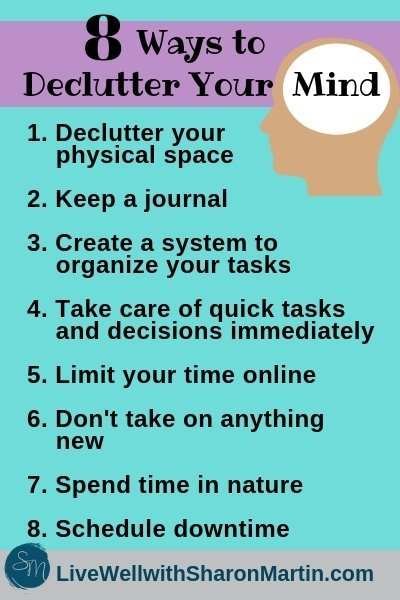
Whispers of chaos – that’s how mental clutter often begins, subtle yet overwhelming. In a world that glorifies busyness, we chase productivity only to find our minds buried under a pile of unfinished thoughts, endless to-do lists, and nagging worries. Did you know that according to the American Psychological Association, chronic stress from mental overload can impair decision-making and even affect physical health? This article dives into practical ways to declutter your mind, offering you a pathway to mental clarity and a more balanced lifestyle. By the end, you’ll discover techniques that not only reduce cognitive overload but also enhance your overall well-being, making everyday life feel less like a whirlwind and more like a serene walk.
A Personal Journey Through the Mental Maze
Picture this: a few years back, I was juggling a demanding job, family obligations, and that ever-present digital noise from social media. My mind? It was like an attic stuffed with forgotten boxes – memories, regrets, and what-ifs piled high. One rainy afternoon in London, where I live, I finally hit a wall. “Enough,” I thought, and decided to try mindfulness meditation. It wasn’t some magical fix; I struggled at first, my thoughts racing like Tube trains during rush hour. But gradually, by setting aside just ten minutes a day, I learned to sort through the junk. That personal anecdote taught me a vital lesson: mental decluttering starts with awareness. It’s about acknowledging the clutter, like admitting you’ve got too many tabs open on your browser, and then methodically closing them one by one.
Techniques like journaling became my go-to for reducing mental clutter. I’d scribble down worries, turning abstract fears into tangible words, which made them easier to confront or dismiss. This isn’t just my opinion; it’s backed by experiences shared in therapy sessions and wellness communities. And hey, if you’re skeptical, imagine chatting with a friend over a cup of tea: “But how does writing help?” you’d ask. Well, it externalizes the internal chaos, giving you space to breathe. In Britain, we often say “keep calm and carry on,” but sometimes you need to pause and clear the deck first. That unexpected analogy of the mind as a cluttered attic, full of dust and forgotten treasures, highlights how decluttering isn’t about erasing memories but organizing them for better access.
Echoes of Ancient Serenity in Modern Chaos
Fast-forward to history’s quiet corners, where cultures have long mastered the art of mental clarity. Take Japanese Zen practices, for instance – they’re not just about sitting still; they’re a profound comparison to our frantic lifestyles. In ancient Japan, monks would rake Zen gardens, each deliberate stroke symbolizing the removal of mental debris, much like how we might tidy a workspace to boost focus. This cultural reference shows that mindfulness techniques for mental clarity aren’t new-age fads; they’re time-tested traditions. Back home in the UK, we have our own nods to this, like the stoic philosophers who influenced British thinkers, emphasizing that true strength comes from within, not from external hustle.
Yet, a common myth persists: that mental decluttering requires hours of isolation, like a monk on a mountain. The truth is uncomfortable – you can integrate it into daily routines without upending your life. For example, pairing it with a simple walk in the countryside, where the fresh air acts as a natural reset. This unexpected comparison between a Zen garden and your daily commute illustrates how small, intentional actions can transform overwhelming stress into manageable moments. And just there, in the midst of it, you realize the power of presence. It’s not about escaping reality but engaging with it more fully, free from the weight of unnecessary thoughts.
Unveiling Hidden Layers
Dive deeper, and you’ll see how pop culture, like the movie “Inception,” mirrors our mental states – layers upon layers of dreams representing the nested complexities in our minds. But unlike the film’s high-stakes plot, real-life decluttering is straightforward and empowering.
Conquering the Invisible Overload with Purposeful Steps
Now, let’s address the elephant in the room: that persistent mental fog that blurs your focus and zaps your energy. In our serious pursuit of a fulfilling lifestyle, we often overload our brains with multitasking, only to find ourselves less effective. The irony? We’re trying to do more but achieving less. To counter this, start by identifying triggers – those habits like endless scrolling that sneak in uninvited. Once pinpointed, apply targeted solutions, such as digital detoxes. For instance, set boundaries by turning off notifications during meals, a practice that can immediately clear your mental space and foster deeper connections.
Here’s how it unfolds: first, prioritize tasks using techniques like the Eisenhower Matrix, sorting what’s urgent from what’s merely noisy. Second, incorporate physical activity; a brisk walk can act as a mental sweep, flushing out stress like clearing a clogged drain. And third, practice gratitude exercises – not the fluffy kind, but genuine reflections that shift your perspective. In American terms, it’s like getting your ducks in a row before a big storm hits. This step-by-step approach isn’t a rigid list; it’s a flexible toolkit. Y’know, and that’s when it hits you – the relief of a lighter mind. By weaving these into your routine, you’re not just solving the problem; you’re building resilience for the long haul.
Of course, it’s easy to overlook the emotional side. Opinions vary, but I firmly believe that acknowledging feelings, even the uncomfortable ones, is key to true decluttering. No quick fixes here; it’s a process, much like tending a garden that requires regular weeding.
Final Reflections: A Twist on Inner Peace
What if the key to a richer life isn’t in adding more, but in subtracting the excess? That’s the twist – decluttering your mind isn’t just about relief; it’s about unlocking creativity and joy you didn’t know was buried. So, take action now: commit to a five-minute breathing exercise today, and watch how it ripples into your weeks. How has unchecked mental clutter shaped your own story, and what one change could you make to reclaim your mental space? Share your thoughts in the comments; let’s turn this into a conversation for real change.